Launch offer — valid today only

📄 Digital book in PDF · read it on your phone or print it

The Pesticide Applicator Core Exam in Drawings One Topic on Every Page

Every core exam topic on its own page: the label section by section, REI and PHI, toxicity and PPE, calibration math, drift, spills and storage. The drawing first, then what to remember. It follows the national core manual, and state-specific rules are flagged so you can check them with your state. 74 illustrated pages.

START STUDYING THIS WAY

🔒 Secure checkout · PDF by email · 30-day guarantee

Every topic, its own pageEach label section, formula and rule drawn, with the explanation right beside it
74 illustrated pages9 parts, from The Label Is the Law to the Night-Before Checklist
Up-to-date sourcesNational Core Manual, FIFRA and EPA 40 CFR Parts 170-171
PDF by emailFormat

Look Inside the Book

Every page has one big drawing and a box with the numbers, rules and steps you need to know:

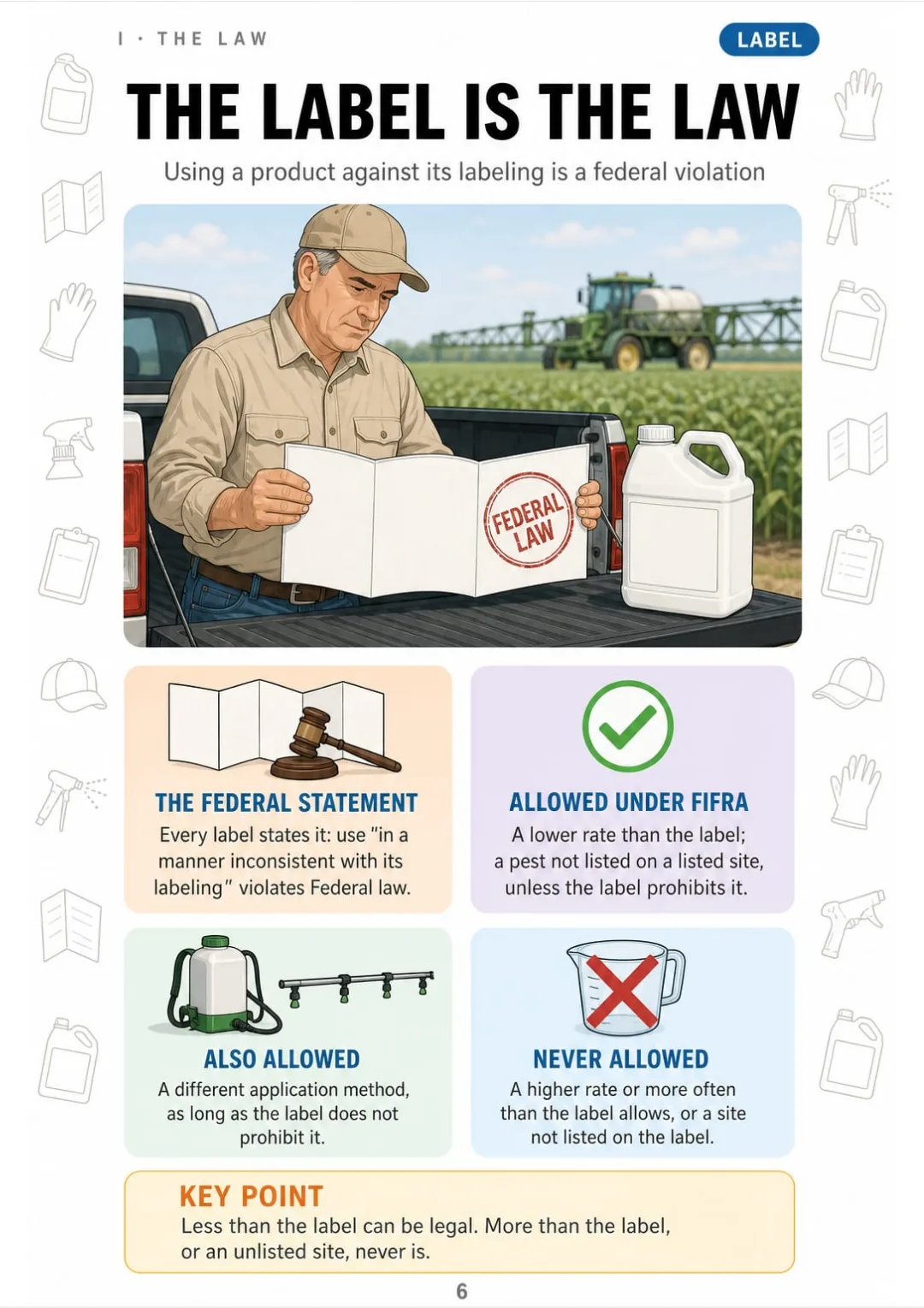
Lower rate: allowed. Higher rate or unlisted site: federal violation.
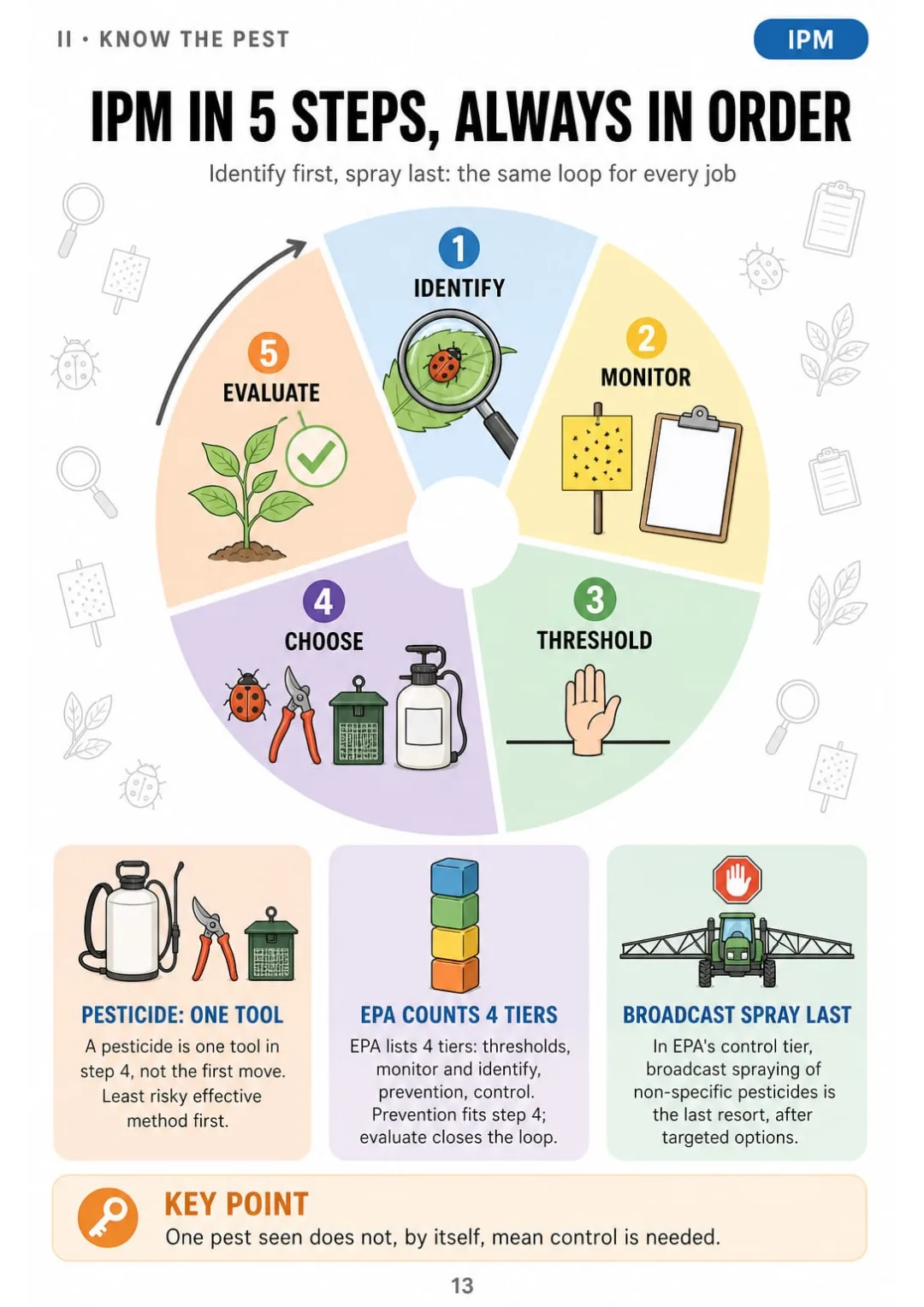
IPM wheel: identify, monitor, threshold, choose, evaluate. Broadcast spraying of non-specific pesticides comes last.
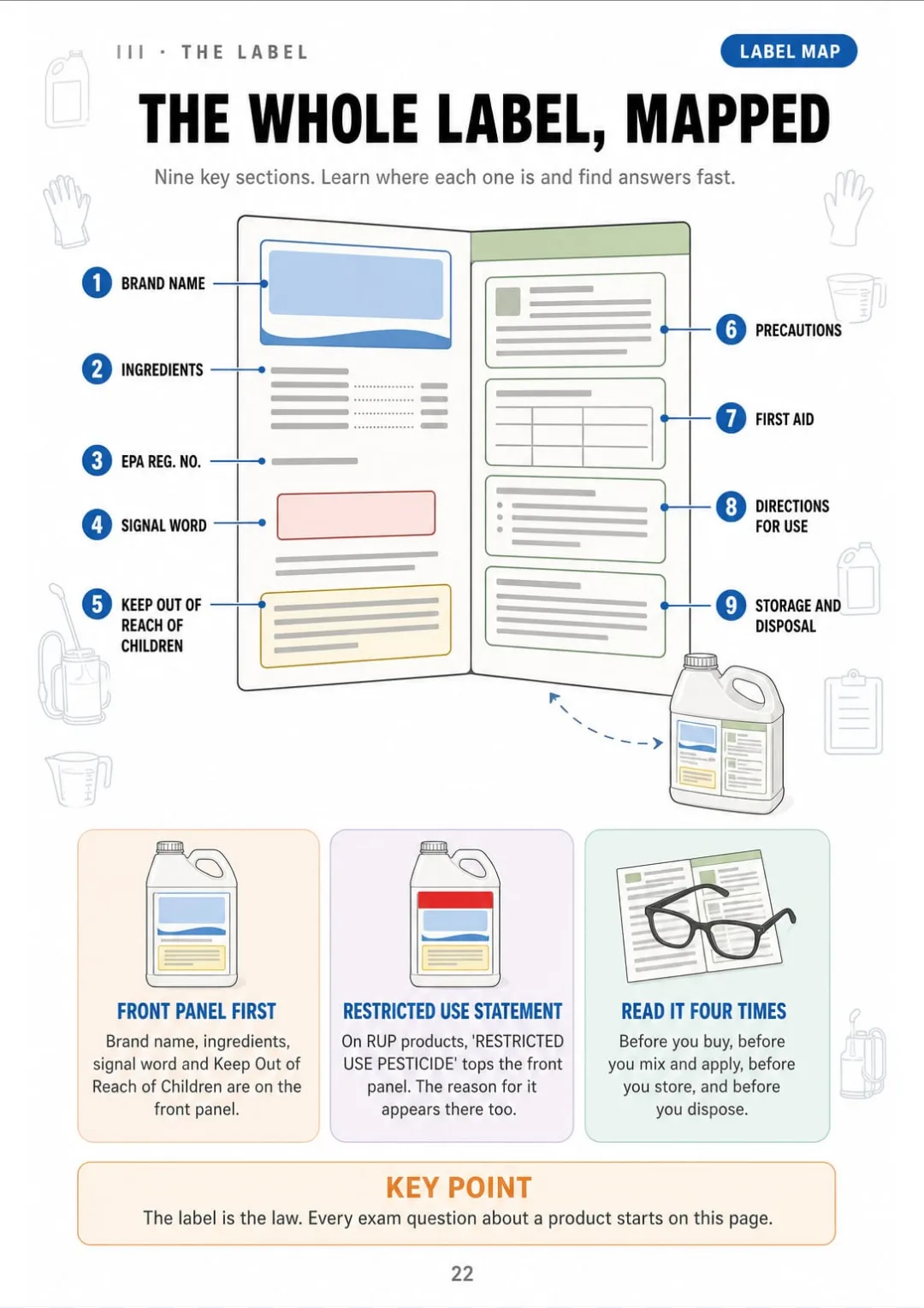
A full pesticide label with its 9 sections numbered, from brand name to disposal.
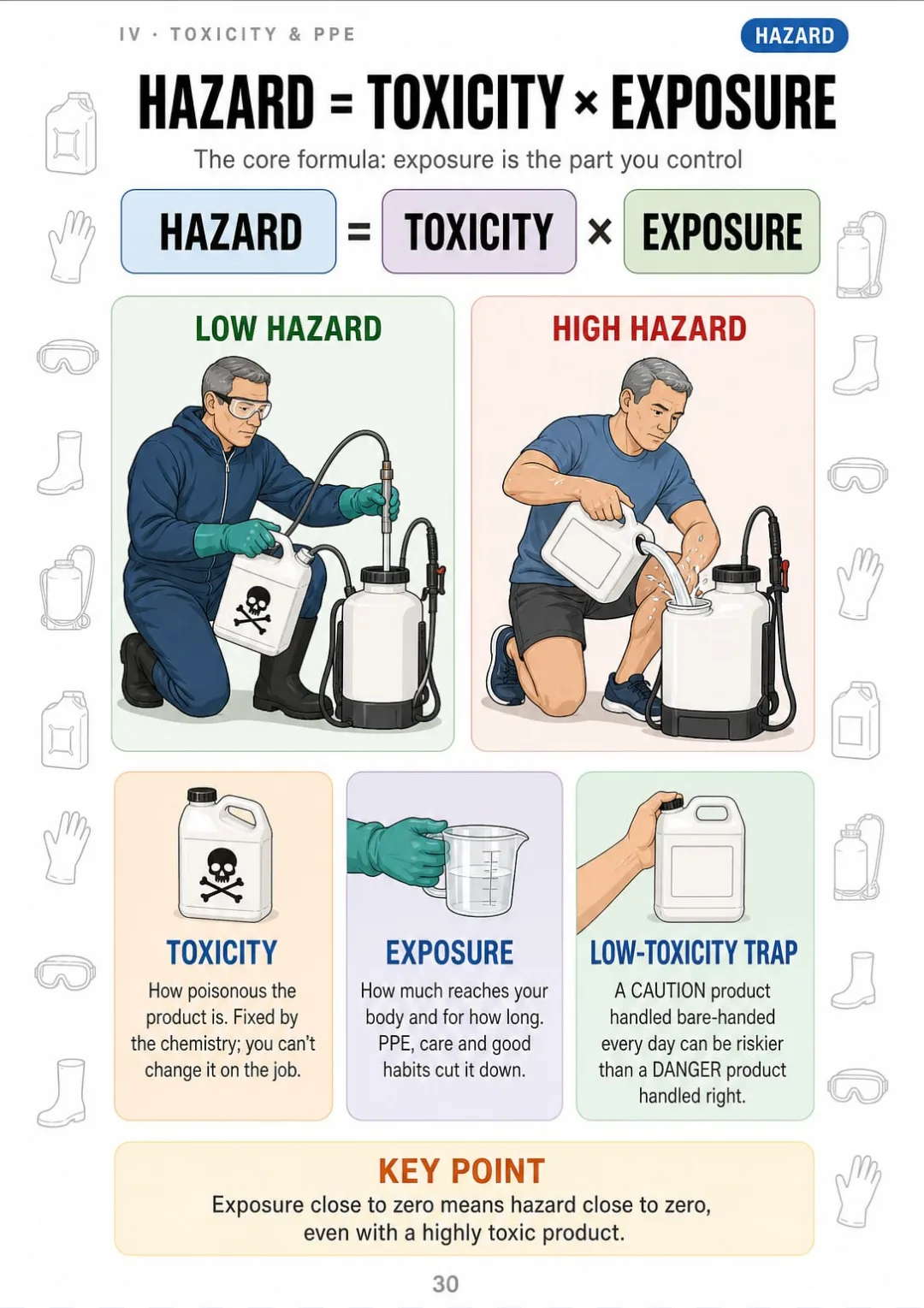
Hazard = Toxicity × Exposure: the only factor you control on the job is exposure.
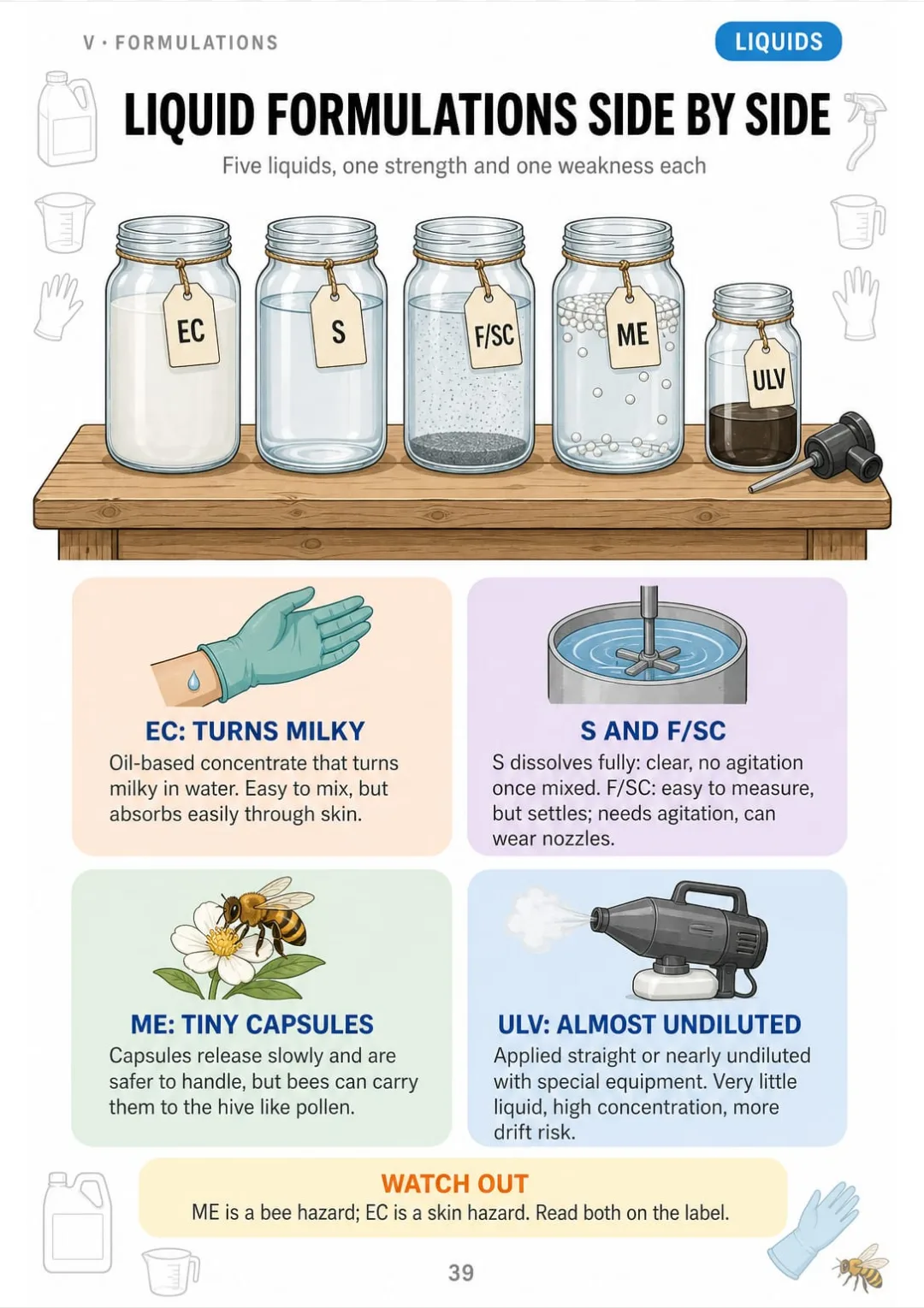
EC turns milky and soaks into skin; ME capsules can end up in the beehive.
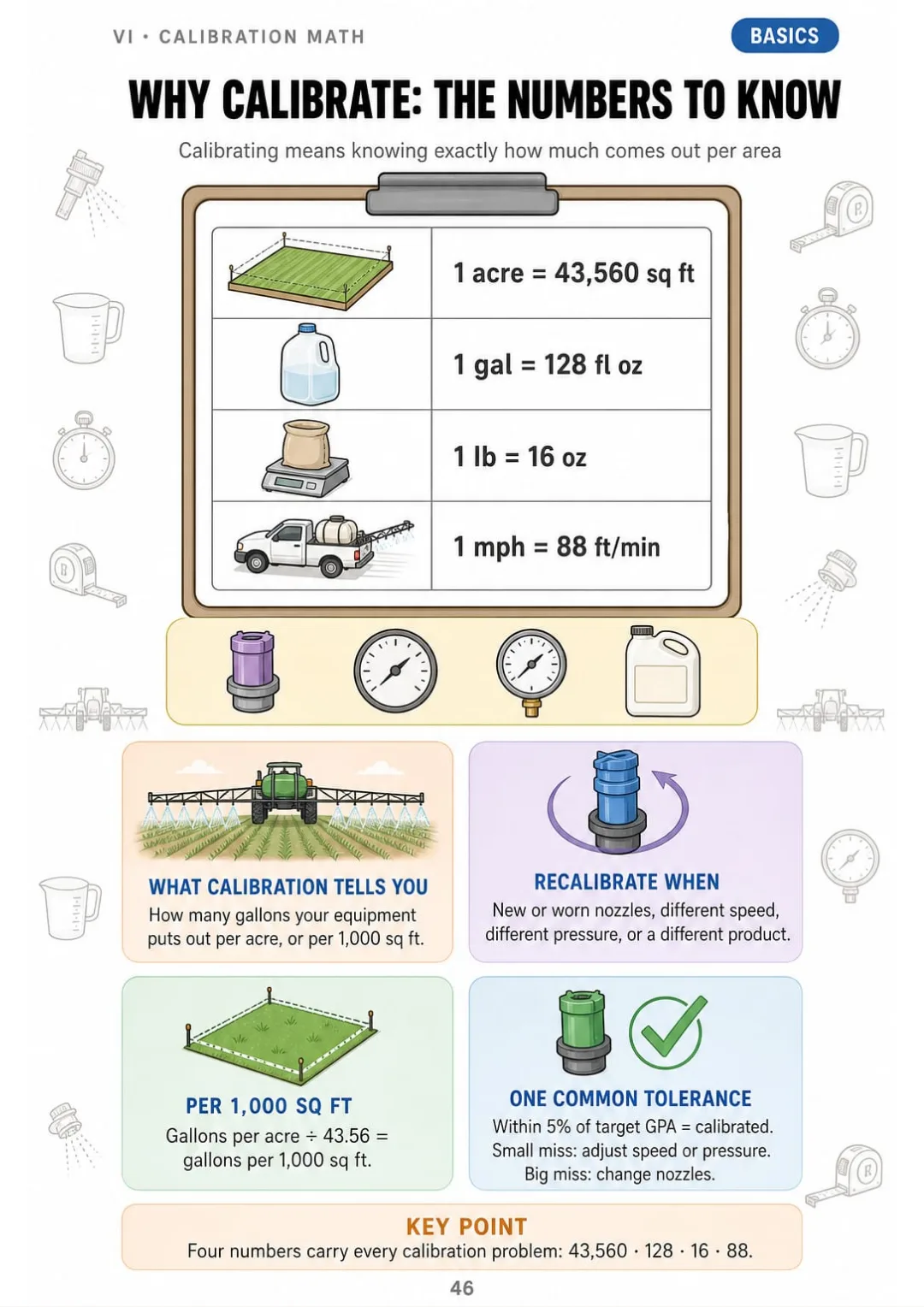
1 acre = 43,560 sq ft · 1 gal = 128 fl oz · 1 mph = 88 ft/min
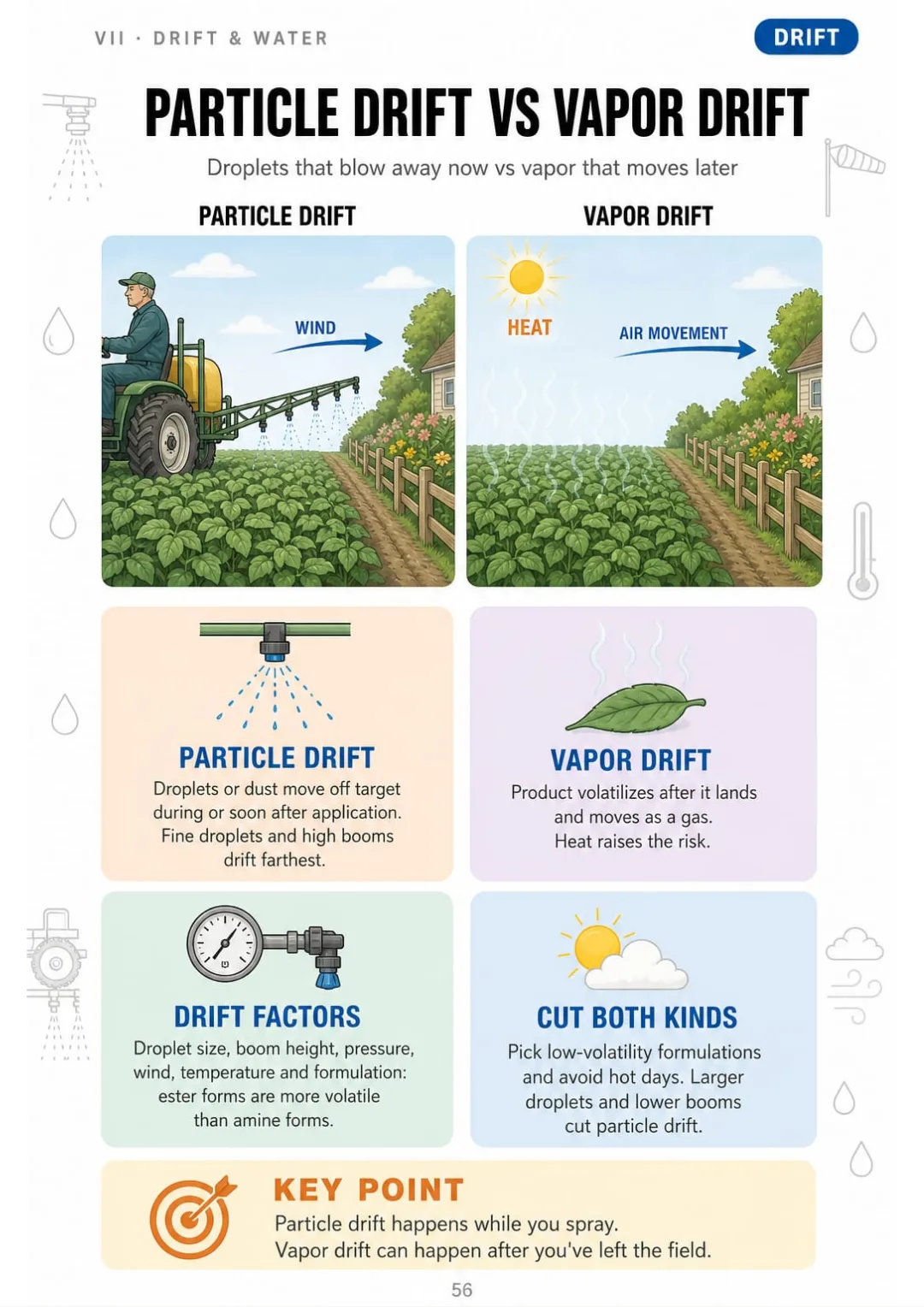
Particle drift moves during spraying; vapor drift moves after, with heat. Esters vaporize more than amines.
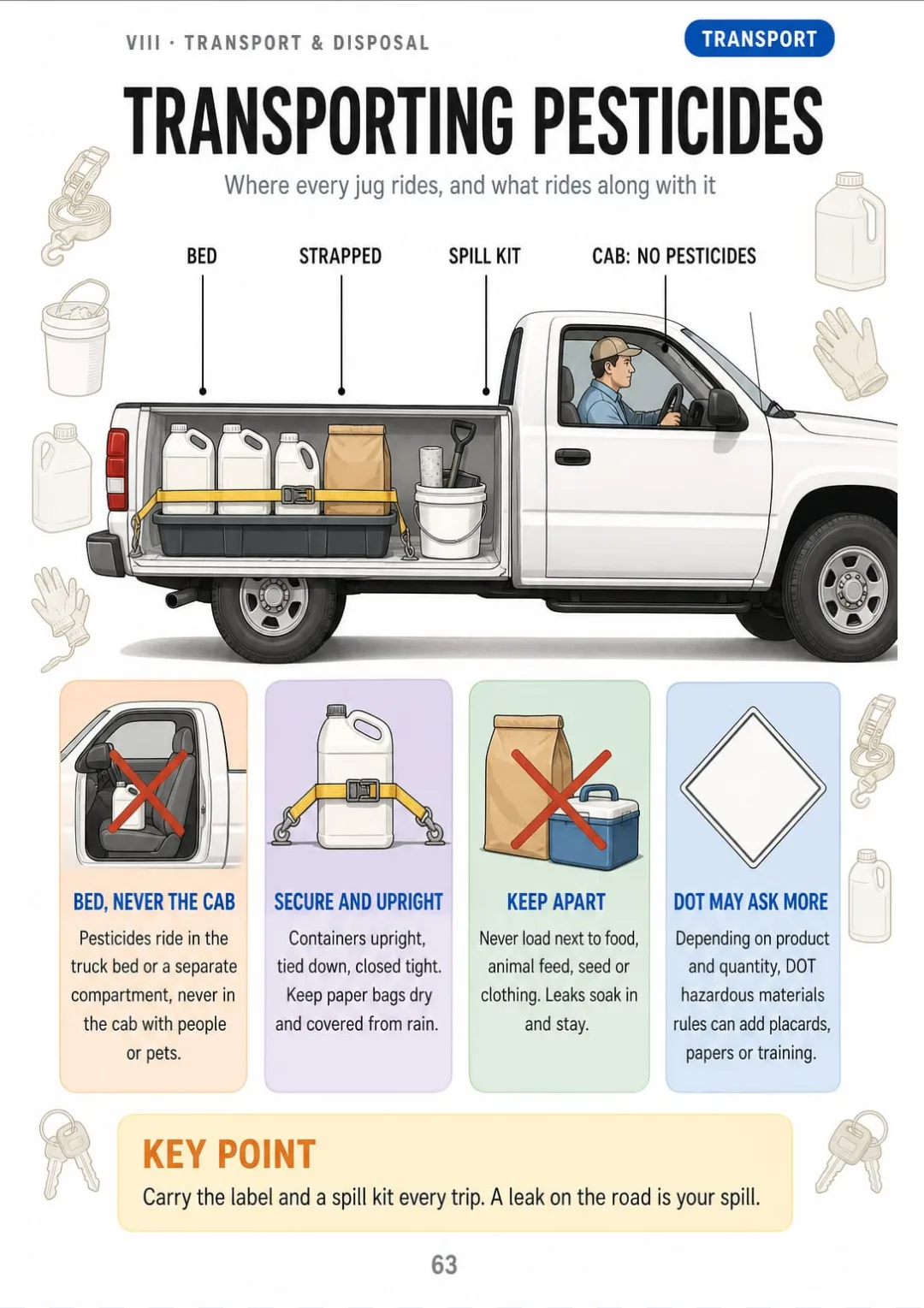
Truck bed, strapped upright, away from food and feed, spill kit and label on board.

Swipe to see more →

These are real pages from the book. The table of contents is the full one: 9 parts and 69 topics.

The Problem Isn't You. It's How It Was Explained to You.

You're sitting at the core exam with a sample label in front of you, and the question asks where the PPE requirements are. Signal word, precautionary statements, directions for use: it all runs together.

The manual covers the label in page after page of paragraphs. Nine sections, each one described in words, and none of them shown where it actually sits on the label.

A full pesticide label with its 9 sections numbered, from brand name to disposal.

In this book, that label is one page: a full pesticide label drawn and numbered, 9 sections from brand name to disposal. You see where the signal word goes, where the RUP box is, and where REI and PHI are printed.

Every other core topic gets the same treatment: IPM in 5 steps, LD50 and LC50, liquid vs dry formulations, the 4-step calibration, particle vs vapor drift. One page each.

Next time you hold a label, you know which section has the answer, and you find it without going back to the manual.

COMPARE FOR YOURSELF

Same Topic, Two Ways to Study It

THIS
  • The manual: line after line
  • IPM steps explained only in words
  • You walk into the exam second-guessing yourself
Integrated pest management (IPM) is an approach to pest management that combines biological, cultural, mechanical, physical and chemical control tactics in a manner that minimizes economic, health and environmental risks. The process begins with the correct identification of the pest, followed by regular monitoring of pest populations and the establishment of an action threshold, defined as the population level at which control measures should be implemented. Once the threshold is reached, the applicator selects among the available control options and subsequently evaluates the effectiveness of the measures taken.
FOR THIS
  • IPM drawn as one wheel
  • The 5 steps in one box, always in order
  • You see it and you get it
IPM wheel: identify, monitor, threshold, choose, evaluate. Broadcast spraying of non-specific pesticides comes last.
CONTENTS

Take a Look at the 9 Parts and 69 Topics

The law, the pest, the label, toxicity and PPE, formulations, calibration math, drift, transport and storage, and a final exam review: 74 pages, all illustrated.

IThe Law Behind Every Spray · pp. 6-12
  1. The Label Is the Law
  2. FIFRA, EPA and Your State: Who Does What
  3. Restricted Use Pesticides (RUP)
  4. Private vs Commercial Applicator
  5. The Other Federal Laws on the Exam
  6. Section 18, 24(c) and 25(b)
  7. Records, Certification and Recertification
IIKnow the Pest First · pp. 13-21
  1. Integrated Pest Management in 5 Steps
  2. Action Threshold vs Economic Injury Level
  3. Control Methods Side by Side
  4. Prevention, Suppression, Eradication
  5. Insects vs Mites vs Spiders
  6. Complete vs Gradual Metamorphosis
  7. Weeds: Grasses, Sedges, Broadleaves
  8. Plant Disease Triangle and Vertebrate Pests
  9. Pesticide Resistance and Mode of Action Groups
IIIReading the Label, Section by Section · pp. 22-29
  1. The Whole Label, Drawn and Labeled
  2. Label vs Labeling
  3. Names and Ingredients
  4. EPA Registration and Establishment Numbers
  5. Signal Words: CAUTION, WARNING, DANGER
  6. Precautionary Statements
  7. Directions for Use, REI and PHI
  8. Agricultural Use Requirements Box
IVToxicity, Exposure and PPE · pp. 30-38
  1. Hazard = Toxicity × Exposure
  2. LD50 and LC50: Lower Means More Toxic
  3. Acute vs Chronic Effects
  4. Four Routes into the Body
  5. Signs of Pesticide Poisoning
  6. First Aid by Route
  7. PPE: Gloves, Coveralls, Boots
  8. Respirators and Eye Protection
  9. Cleaning and Storing PPE
VFormulations and Mixing · pp. 39-45
  1. Liquid Formulations Side by Side
  2. Dry Formulations Side by Side
  3. How to Read 4EC and 80WP
  4. Adjuvants: What Each One Does
  5. Compatibility and the Jar Test
  6. Mixing Order in the Tank
  7. Safe Mixing and Loading Site
VICalibration Math, Same 4 Steps · pp. 46-55
  1. Why Calibrate and the Numbers to Know
  2. The 4-Step Method
  3. Step 1: Measure Speed and Nozzle Output
  4. Step 2: Figure the Area
  5. Step 3: Gallons per Acre, the Formula
  6. Step 3 Shortcut: The 1/128 Acre Method
  7. Backpack and Hand-Can per 1,000 sq ft
  8. Step 4: Product per Tank
  9. Active Ingredient Math: EC and WP
  10. Percent Solutions for Spot Treatments
VIIDrift, Water and the Environment · pp. 56-62
  1. Particle Drift vs Vapor Drift
  2. Wind and Temperature Inversions
  3. Reducing Drift on the Job
  4. Runoff and Leaching
  5. Protecting Bees and Pollinators
  6. Endangered Species and Bulletins Live! Two
  7. Sensitive Areas and Nontarget Organisms
VIIITransport, Storage, Spills, Disposal · pp. 63-69
  1. Transporting Pesticides
  2. Storage Site Rules
  3. Spills: The 3 Cs
  4. Pesticide Fires
  5. Triple Rinse and Pressure Rinse
  6. Disposal of Containers and Excess Mix
  7. Working with Customers and the Public
IXExam Review · pp. 70-74
  1. How the Core Exam Works
  2. Pairs That Get Mixed Up
  3. Calibration on One Page
  4. Most Frequent Mistakes, Drawn Wrong and Right
  5. Night-Before Checklist

One Page, One Topic, All Clear

Think of it this way:

You're on the core exam and the question gives you a nozzle output, a ground speed and a swath width. You need gallons per acre, and the clock is running.

In the book, you open the calibration page and see the same 4 steps drawn in order: measure the output, figure the area, gallons per acre, product per tank, with the numbers to know in a box: 1 acre = 43,560 sq ft, 1 gal = 128 fl oz, 1 mph = 88 ft/min.

EC turns milky and soaks into skin; ME capsules can end up in the beehive.

Same with the label sections, the signal words, REI vs PHI, LD50 and the 3 Cs of a spill: each one on its own page.

Pesticide Applicator Core Illustrated is 9 parts and 69 topics, all drawn, and it ends with an exam review: pairs that get mixed up, calibration on one page, frequent mistakes drawn wrong and right, and a night-before checklist.
What you see drawn, you don't have to memorize.

What's Inside Pesticide Applicator Core Illustrated:

Ipp. 6-12

The Law Behind Every Spray

Why the label is the law, who does what (FIFRA, EPA, your state), restricted use pesticides, private vs commercial, the other federal laws, Sections 18, 24(c) and 25(b), records and recertification.

IIpp. 13-21

Know the Pest First

IPM in 5 steps, action threshold vs economic injury level, control methods side by side, insects vs mites vs spiders, metamorphosis, weed groups, the disease triangle and resistance.

IIIpp. 22-29

Reading the Label, Section by Section

The whole label drawn and labeled, label vs labeling, ingredients, EPA numbers, CAUTION, WARNING and DANGER, precautionary statements, REI and PHI, and the agricultural use box.

IVpp. 30-38

Toxicity, Exposure and PPE

Hazard = toxicity × exposure, LD50 and LC50, acute vs chronic, the four routes into the body, signs of poisoning, first aid by route, and how to pick, use and clean PPE.

Vpp. 39-45

Formulations and Mixing

Liquid and dry formulations side by side, how to read 4EC and 80WP, adjuvants, the jar test, mixing order in the tank and a safe mixing and loading site.

VIpp. 46-55

Calibration Math, Same 4 Steps

The numbers to know and the same 4-step method: speed and nozzle output, area, gallons per acre, the 1/128 acre shortcut, backpack math per 1,000 sq ft, product per tank and active ingredient math.

VIIpp. 56-62

Drift, Water and the Environment

Particle vs vapor drift, wind and inversions, cutting drift on the job, runoff and leaching, bees and pollinators, endangered species bulletins and sensitive areas.

VIIIpp. 63-69

Transport, Storage, Spills, Disposal

Transporting pesticides, storage site rules, the 3 Cs of a spill, pesticide fires, triple rinse and pressure rinse, disposal and dealing with customers and the public.

IXpp. 70-74

Exam Review

How the core exam works, pairs that get mixed up, calibration on one page, frequent mistakes drawn wrong and right, and a night-before checklist.
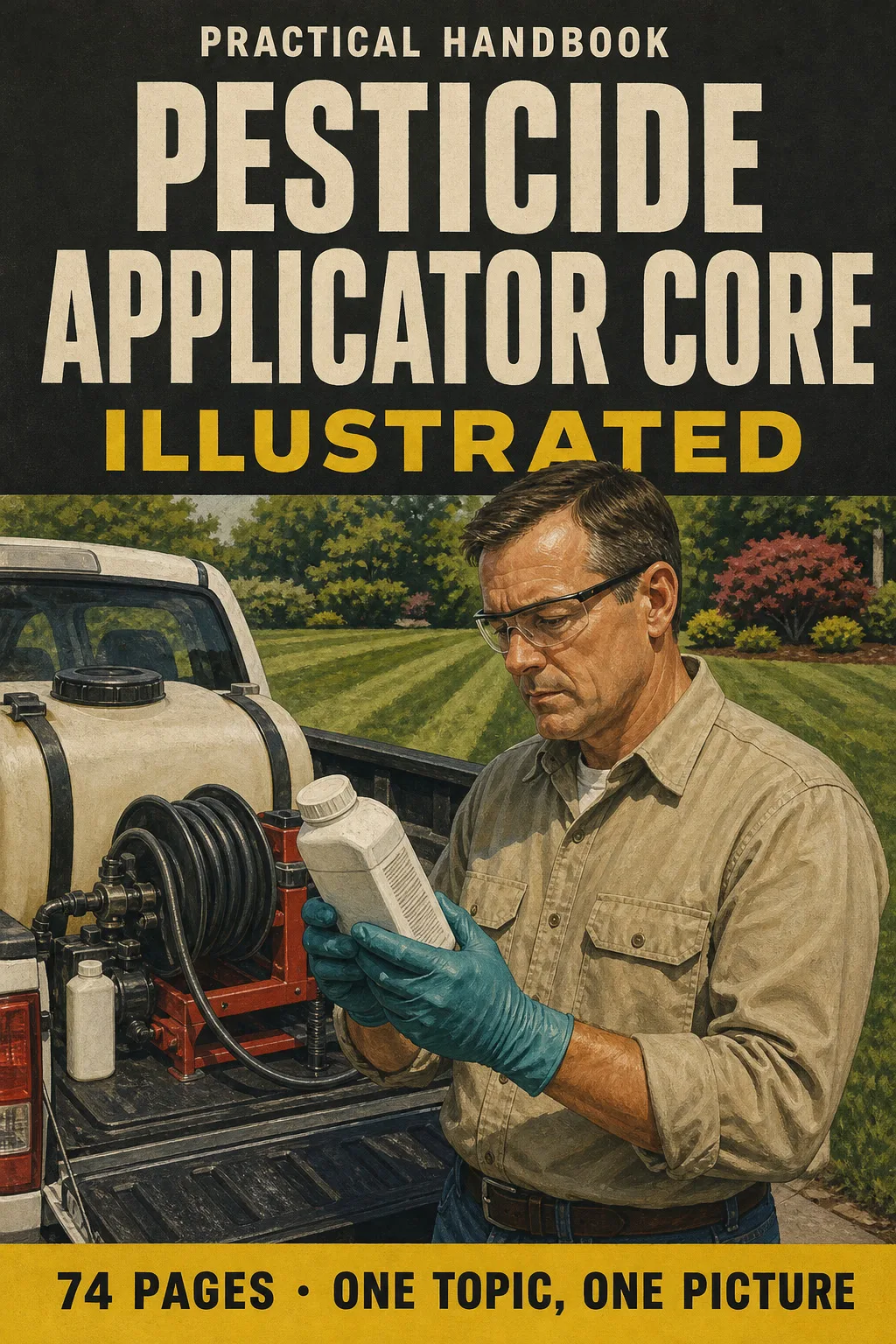
At the end of the book: A final exam review: pairs that get mixed up, calibration on one page, frequent mistakes drawn wrong and right, and a night-before checklist.
Plus: 2 Free Books

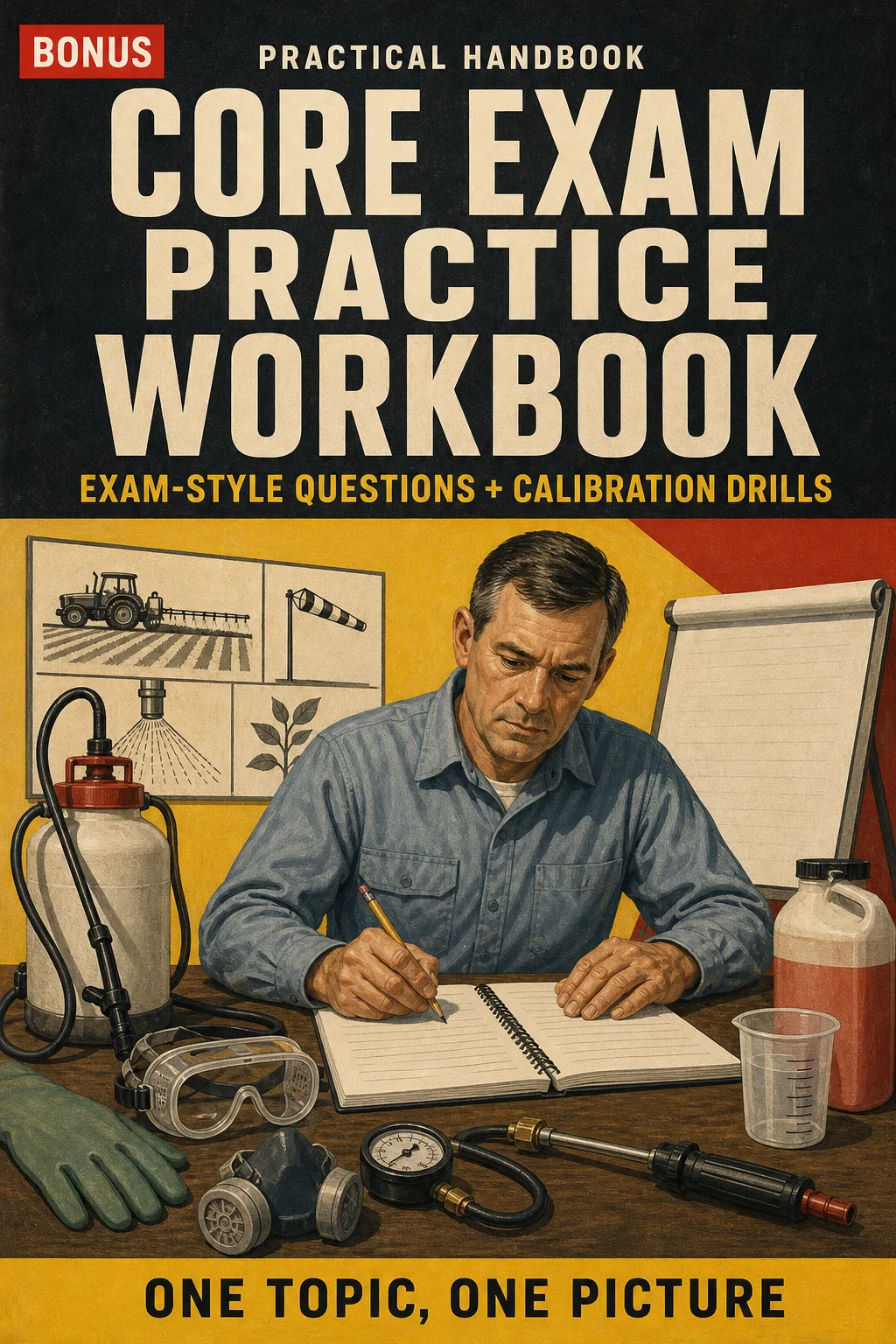
Core Exam Practice Workbook: Exam-Style Questions + Calibration Drills

BONUS 1: «Core Exam Practice Workbook: Exam-Style Questions + Calibration Drills»

Value on its own: US$ 17.90

Test yourself topic by topic with exam-style questions and step-by-step answers, plus extra calibration problems to practice the math until it feels routine.

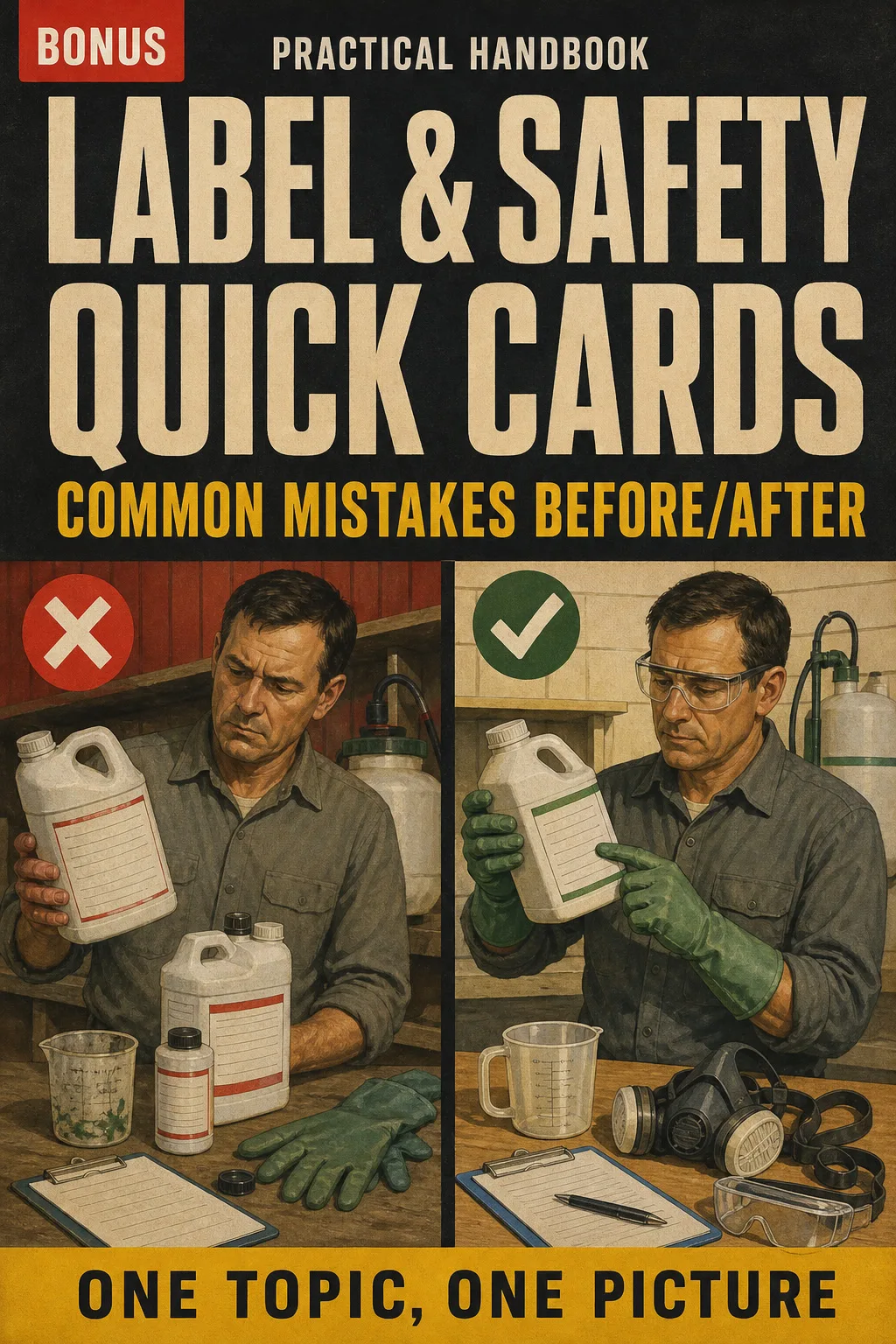
Label & Safety Quick Cards: Common Mistakes Before/After

BONUS 2: «Label & Safety Quick Cards: Common Mistakes Before/After»

Value on its own: US$ 14.90

Review the night before in minutes: one card per key idea, from signal words to the 3 Cs of a spill, with the most frequent mistakes drawn wrong and right.

Pesticide Applicator Core Illustrated with 2 Free Books

  • Pesticide Applicator Core Illustrated: 74 illustrated pagesUS$ 63
  • BONUS 1: Core Exam Practice Workbook: Exam-Style Questions + Calibration DrillsUS$ 17.90
  • BONUS 2: Label & Safety Quick Cards: Common Mistakes Before/AfterUS$ 14.90
  • High-resolution PDF to printIncluded
Total value US$ 95.80
YOUR PRICE:
US$ 27
You save US$ 68.80
YES, I WANT PESTICIDE APPLICATOR CORE ILLUSTRATED FOR US$ 27

📄 This is a digital PDF book sent to your email: nothing is printed or shipped.

Secure purchaseEncrypted payment30-day guarantee

PDF by email: We email you Pesticide Applicator Core Illustrated as a PDF, together with the two free books. It's a single payment: no installments, no extra charges.

Who This Book Is For

You're studying for the core

You're studying for the core

Each topic of the national core manual on its own page, drawn, so the law, the label and the math stop blending together.

Your exam date is set

Your exam date is set

The exam review part and the 4-step calibration let you go over the core in order, one page at a time, and print what you want to keep at hand.

You already spray for a living

You already spray for a living

You know the job; the book puts the exam words on it: label sections, REI vs PHI, drift types and the calibration numbers, all drawn.

Everything You Get Today

US$ 95.80US$ 27
YES, I WANT PESTICIDE APPLICATOR CORE ILLUSTRATED FOR US$ 27

📄 This is a digital PDF book sent to your email: nothing is printed or shipped.

30DAYS
GUARANTEE

30-Day Guarantee

Try Pesticide Applicator Core Illustrated for 30 days, bonus books included.

We refund everything if the file won't open, if the book isn't what you see here, if you were charged twice or if the email doesn't arrive. Just email us.

You pay once. No subscriptions.

Frequently Asked Questions

Is it for me if I've been spraying for years but haven't taken a written exam in decades?

Yes. It doesn't treat you like a beginner: it takes what you already do on the job and shows it the way the core exam asks it, one drawn page per topic.

Does it work for my state, and where does the content come from?

It's built on the National Pesticide Applicator Certification Core Manual and the federal rules in FIFRA and EPA 40 CFR Parts 170 and 171. Your state may add its own rules, so those points are flagged for you to check with your state department of agriculture.

Is this official material?

No. It's an illustrated study book, and the official manual and your state's rules are still the reference. What it adds: each topic drawn on one page, the full label mapped section by section, calibration in the same 4 steps with the numbers in a box, and an exam review with the pairs that get mixed up. You use it next to the manual, not instead of it.

Does it replace the training course?

No. It's a study aid: it doesn't give you a license, a certificate or recertification credits (CEUs). If your state requires a course, training hours or credits, you still need them.

Are the practice questions the ones on the exam?

No. They're written for this book in the style of the core exam, to help you review. They're not official exam questions.

When and how do I get it?

PDF by email, to the address you enter at checkout. The 2 bonus books come the same way.

Do I have to pay every month?

No. It's a one-time payment.

Can I have it on paper?

Yes. It's a printable PDF: print the whole book or just the pages you want to keep in the truck.

How does the refund work?

You have 30 days. We refund everything if the file won't open, if the book isn't what you see on this page, if you were charged twice or if the email doesn't arrive: just email us.

Before You Close This Page

No more rereading with nothing sticking.

The pesticide label, section by section: you see it drawn, and it clicks.

You walk into the core exam knowing where everything is.

Drawings make studying faster.

The book is right below.

One-time payment: US$ 27 · Guarantee: 30 days · PDF by email

YES, I WANT PESTICIDE APPLICATOR CORE ILLUSTRATED FOR US$ 27

📄 This is a digital PDF book sent to your email: nothing is printed or shipped.